Short Circuit Faults Happen in a Fraction of a Second — Are Your Cables Ready?
When engineers think about short circuit faults in high-voltage installations, the focus is usually electrical: fault current, breakers, protective devices, and interruption ratings. But there is another aspect that is often underestimated — the mechanical impact.
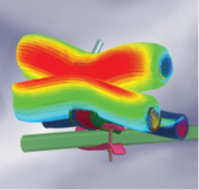
A short circuit is not just an electrical surge. It produces extreme electromagnetic forces between conductors, which can cause power cables to move violently, oscillate, and “whip,” potentially damaging equipment, support structures, and in severe cases, injuring personnel.
And here is the key point: the mechanical peak happens very early.
In many cases, maximum electromechanical forces occur around 0.005 seconds, while breakers and protective devices typically clear the fault only after 0.06–0.1 seconds. In other words, the cables may enter a dangerous mechanical state long before the protective system interrupts the event.
Picture 1: Effects of a Short Circuit Fault
Why Do Cables Move During a Fault?
During a short circuit, current rises to very high levels in an extremely short time. High currents in parallel conductors generate strong attraction and repulsion forces, resulting in:
- Rapid and violent cable movement (“cable whipping”)
- Excessive stress on connectors, lugs, and terminations
- Potential damage to trays, ladders, and supporting structures
- Loose connections, increased wear, and cascading failures
The practical takeaway is simple: you cannot rely solely on protective device clearing time. Mechanical containment is required immediately, at the moment fault forces peak.
This Is Where Cable Cleats Become Critical
Cable cleats are not general-purpose cable management accessories. They are engineered containment devices designed specifically for short circuit conditions.
Their role is to restrain cables when electromechanical forces are at their highest, by:
- Preventing violent displacement and whipping
- Maintaining spacing and cable geometry
- Reducing mechanical stress on critical termination points
- Minimizing risk to equipment and personnel
In simple terms: protective devices clear the fault — cable cleats prevent the fault from becoming a mechanical hazard.
What Happens Without Proper Cleating?
When cables are not adequately restrained, a short circuit fault can escalate into a chain of risks:
- Insulation damage that can lead to secondary faults or fire
- Termination failures, overheating, and weak points
- Structural damage to supports and containment systems
- Costly damage to electrical equipment
- Injury risk from cable whipping or detached components
- Long downtime and significant repair costs
In complex infrastructure projects, the true cost of a fault is not only electrical — it is physical, operational, and human.
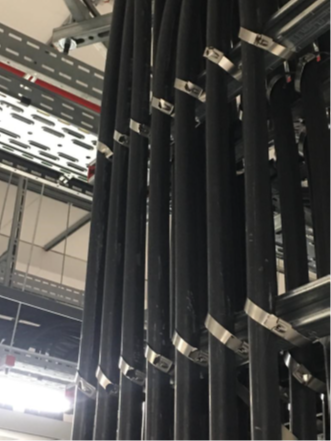
Picture 2: Improper Cleating
IEC 61914 — Why the Standard Matters
Not every cable restraint is suitable for fault conditions. To ensure performance under electromechanical stress, cable cleats must be validated to recognized standards. The key global standard is IEC 61914.
It includes rigorous tests such as:
- Flame propagation resistance
- Lateral and axial load testing
- Impact resistance
- UV resistance
- Corrosion resistance
- And most importantly: resistance to electromechanical forces during a short circuit
This enables engineers to specify cleats based on verified performance — not assumptions.
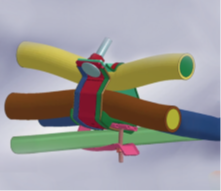
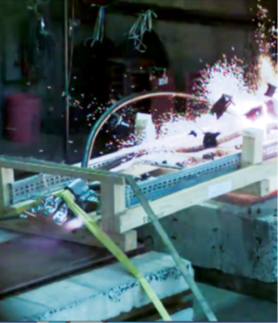
Picture 3: Live short circuit fault at a testing laboratory to validate compliance with this standard
What Does Panduit Offer?
Panduit offers cable cleat solutions designed to restrain and contain power cables during short circuit fault conditions, helping reduce violent movement and minimize risk to equipment and personnel. Their products are designed and validated through a combination of engineering simulations (ANSYS) and live short circuit fault testing in accredited laboratories, supporting compliance with IEC 61914.
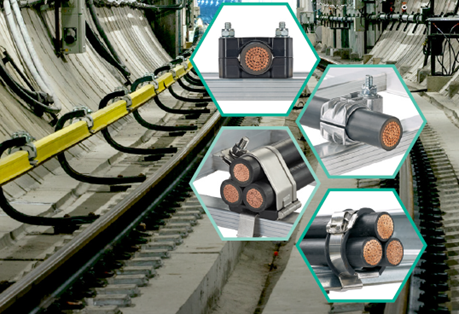
Beyond the cleats themselves, Panduit emphasizes an intuitive installation design, mounting accessories, and dedicated installation tools that enable efficient installation while supporting long-term reliability.
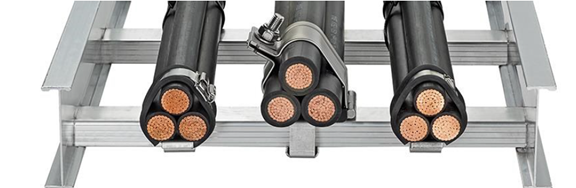
Picture 4: Panduit’s Cable Cleats
Practical Takeaway
If you design, build, or maintain high-voltage systems, cable cleats should be treated as an integral part of the installation — not a last-minute accessory:
- Specify cleats tested to IEC 61914
- Ensure suitability for the project’s kA fault levels
- Plan cleating as part of the overall engineering design (spacing, cable formation, tray/ladder type, and anchor points)
Contact Us


